BAJ exhibition “Unheard Voices” in Hamburg: “A country where journalists are silenced becomes a prison”
 14 October 2026
During Hamburg Press Freedom Week, the BAJ exhibition “The Unheard Voices” is on view, dedicated to Belarusian media workers behind bars. The association’s exhibition has been complemented by an artistic component created by artists living in exile in Germany.
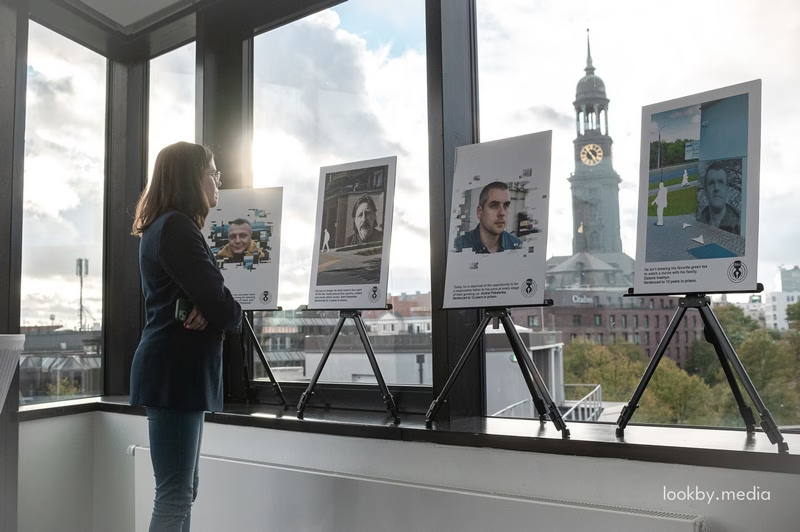
BAJ exhibition “Unheard Voices” opening at Katholische Akademie Hamburg in Hamburg, Germany, on 11 October 2026. Photo: lookby.media
Large-scale events devoted to the repression of Belarusian journalists and to transnational pressure on independent media took place in Hamburg as part of Press Freedom Week.
The organizers combined the Belarusian Association of Journalists’ traditional exhibition with an art installation by Belarusian artists based in Berlin (their names are withheld for security reasons). The result is a full-fledged Belarusian media week in Germany.
From ignorance to awareness
The idea of expanding the exhibition’s format grew out of the organizers’ experience with the German media community. Ksenia Lutskina, a former political prisoner and journalist who initiated the exhibition, told BAJ that a year ago, during interviews with German media, she was often asked to speak only about well-known political prisoners:
“There was a moment when I said, ‘Wouldn’t you like to talk about your colleagues, the journalists who are behind bars?’ And the German journalists told me, ‘We really don’t know much about that.’”
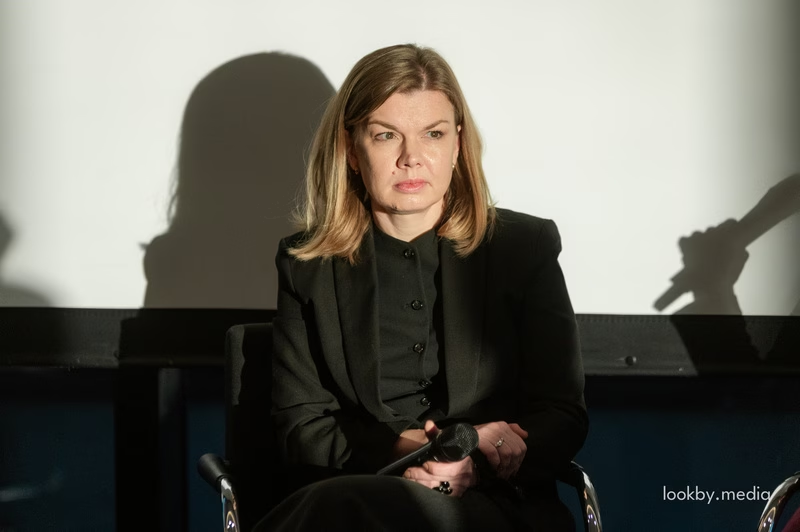
Ksenia Lutskina at the opening of the BAJ exhibition “Unheard Voices” in Hamburg, Germany, 11 October 2026. Photo: lookby.media
According to Lutskina, the main goal of the project was to inform as broad an audience as possible, since many people in Germany remain unaware of the scale of the persecution of journalists in Belarus:
“For most people, it is news that something like this can happen in Europe in the twenty-first century.”
An artistic reimagining
With the support of its German partners, BAJ was able to expand its traditional “Unheard Voices” exhibition in Hamburg.
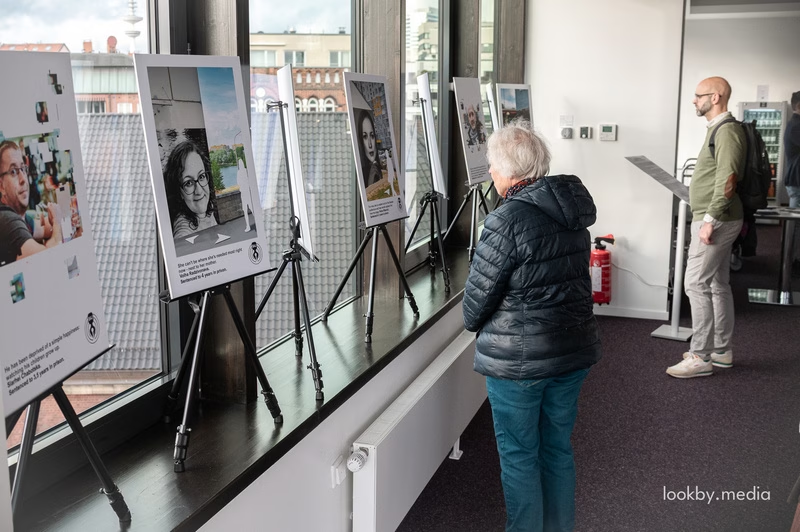
BAJ exhibition “Unheard Voices” opening at Katholische Akademie Hamburg in Hamburg, Germany, on 11 October 2026. Photo: lookby.media
Berlin-based Belarusian artists created a special art installation. Objects that visualize the suppression of the free press in Belarus now accompany BAJ’s display, including an excerpt from a 2020 livestream and photographs from that period.
“My goal was to show, and this is how I put it to our German partners, that a country where independent journalists are silenced has effectively turned into a prison. In our country, when you were in prison, the only source of information was state propaganda. Now the state is trying to do the same to the entire country,” Lutskina explained.
Discussion on transnational repression and accountability
The opening of the exhibition was accompanied by an expert discussion on the persecution of Belarusian media and its transformation into transnational repression against journalists in exile.
The discussion was moderated by Gemma Pörzgen (Deutsche Welle, taz). Pavel Latushka, head of the National Anti-Crisis Management, delivered a keynote address on repression against Belarusian media and transnational pressure. Other participants included Lutskina; Leanid Marozau, a Belarusian international lawyer and legal adviser to Sviatlana Tsikhanouskaya; and Alice Bota of Die Zeit, author of Die Frauen von Belarus (2021), a book about Belarusian women in 2020 which, according to Lutskina, is in high demand among German readers.
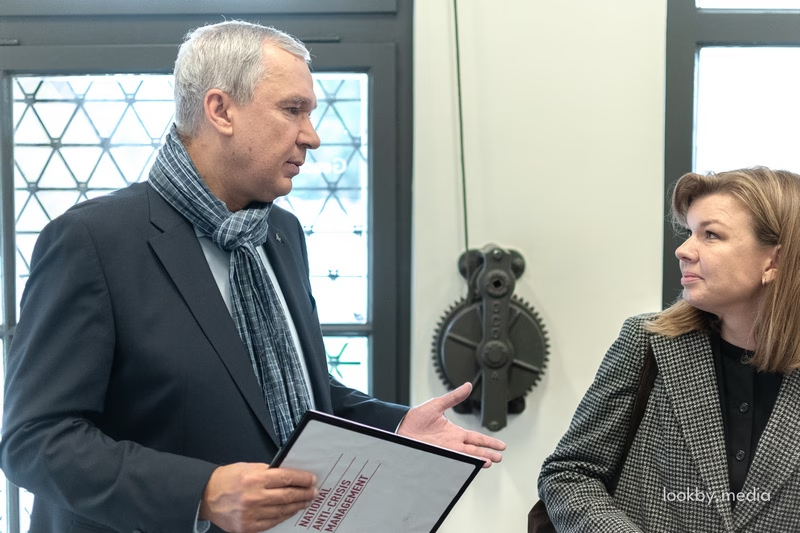
Pavel Latushka and Ksenia Lutskina at the exhibition in Hamburg, Germany, on 11 October 2026. Photo: lookby.media
Lutskina said that German journalists and visitors showed great interest in the details:
“Everyone, and this is very gratifying, carefully read the captions beneath the images. Many people were particularly curious about why the stands list the names of the judges who handed down the sentences. Pavel Latushka explained to the audience in detail why it is necessary to document these names: so that in the future those responsible can be held legally accountable for human rights violations.”
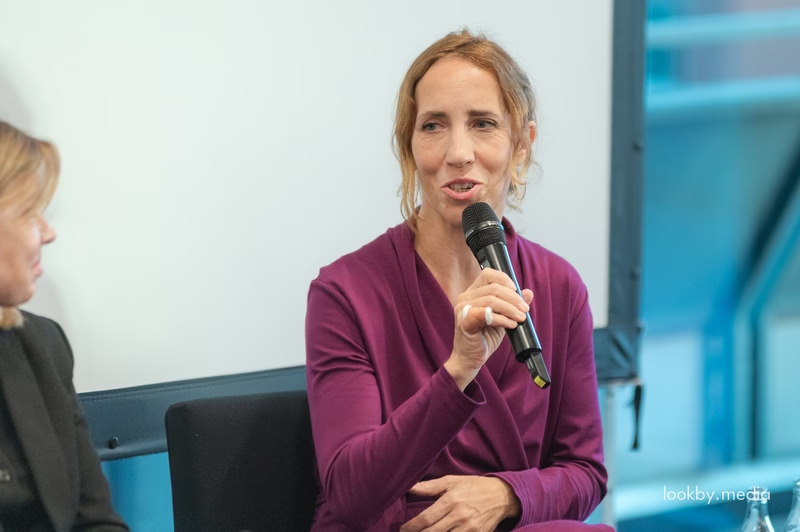
Alice Bota at the BAJ exhibition in Hamburg, Germany, 11 October 2026. Photo: lookby.media
“I also want to note that the exhibition truly captured the interest of Germans. On Sunday, there were so many people here! They lingered at the stands for a long time, carefully read each journalist’s story, were astonished at the severity of the prison sentences, and asked about the reasons for the persecution,” Lutskina said. “I was glad that people came in and read each journalist’s story… They sat, took notes, shook their heads in disbelief, and were horrified.”
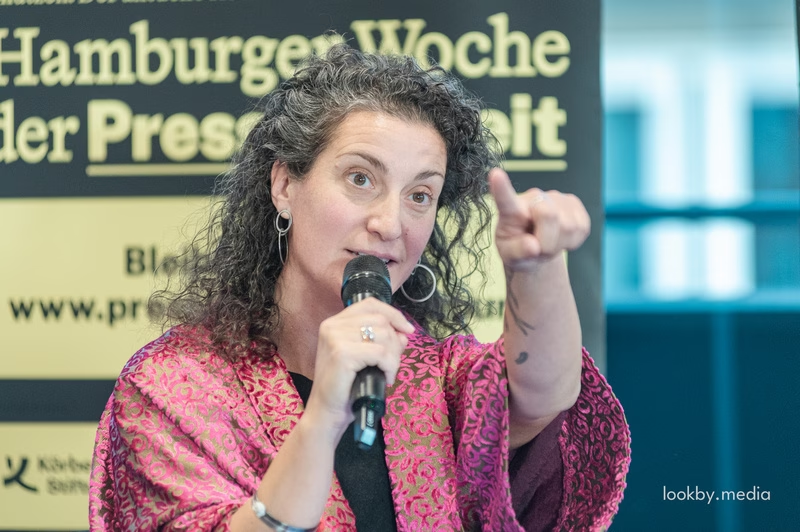
Gemma Pörzgen at the BAJ exhibition in Hamburg, Germany, 11 October 2026. Photo: lookby.media
The former political prisoner said that the topic of imprisoned Belarusian journalists became one of the central themes of Press Freedom Week in Hamburg.
“I would also note that we printed special booklets for the exhibition. Knowledge of what is happening to independent journalists in Belarus needs to be spread.
The brochures cover not only sentences in correctional facilities but also transnational persecution, listings in Russia’s wanted-persons database, and recruitment attempts. In short, we tried to give Germans a concise overview of all of this.
It seems we managed to do something. We will continue to talk about what is happening to freedom of speech in Belarus,” Lutskina said.
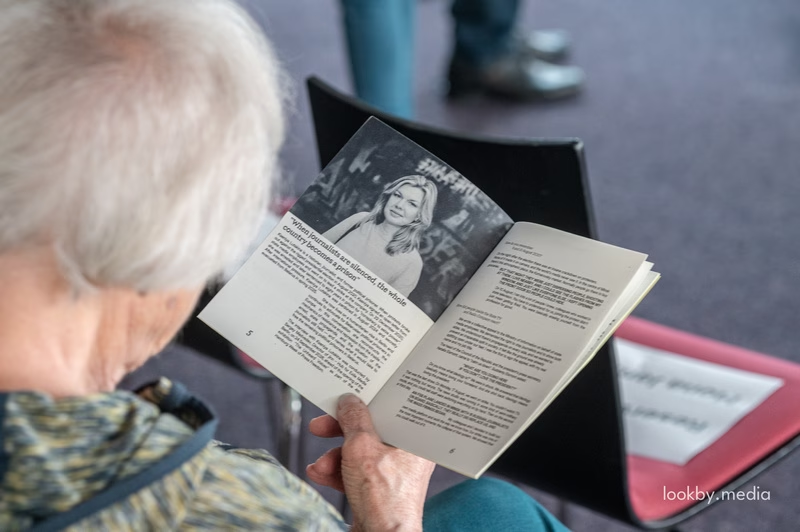
BAJ exhibition “Unheard Voices” in Hamburg, Germany, on 11 October 2026. Photo: lookby.media
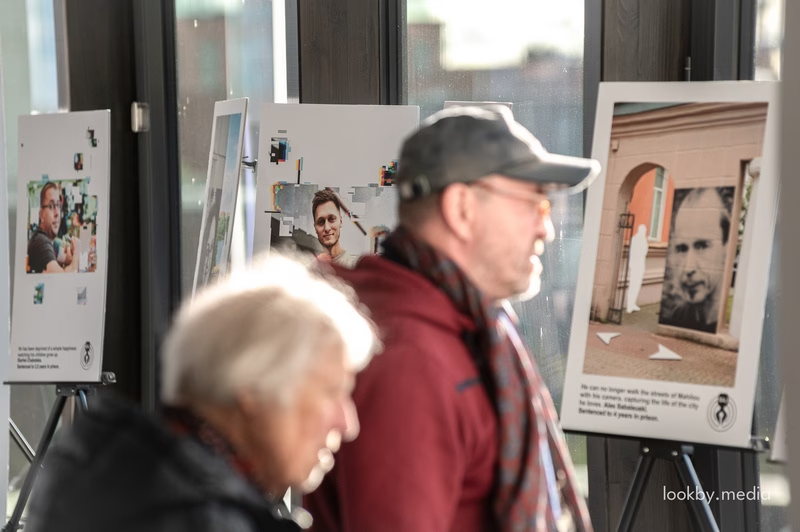
BAJ exhibition “Unheard Voices” in Hamburg, Germany, on 11 October 2026. Photo: lookby.media
How the exhibition came to be
The project was initially named “Journalists: Silent Mode,” which was adapted for the Hamburg event. When the exhibition was created, more than forty journalists were behind bars in Belarus.
Their only “offense” was doing their jobs honestly: gathering and disseminating truthful information of public importance. The Lukashenka regime took from these journalists their freedom, their profession, their homes, their families, their friends, and their colleagues, and threw them behind bars.
Today, 15 media workers remain in detention. They are deprived of the chance to be near their loved ones, raise their children, care for their parents, do the work they love, and benefit society. They are prisoners of conscience.
Concerned that the facts of persecution and repression against journalists might be lost in the information space and turn into white noise, the Belarusian Association of Journalists created the project “Journalists: Silent Mode.”
The ideas for the visuals were proposed by two Belarusian artists, Kasia Budzko and Katsiaryna Miats, who know well what it means to be a journalist in Belarus.
Each work is accompanied by a text conveying the despair of seeing ordinary daily concerns vanish, and of an everyday life that has become unattainable for political prisoners.
Kasia Budzko’s concept involves visually returning journalists to their habitual surroundings. The artist superimposes their photographs onto modern urban landscapes where they once lived, loved, worked, and dreamed. The emotional contrast between the ordinariness of city life and the tragedy of an individual restores visibility to imprisoned journalists. Although they are imprisoned, their presence remains in the life of the city, in people’s memories, and in the history of Belarus.
Katsiaryna Miats’s concept is devoted to preserving personal integrity and human dignity. Drawing inspiration from the metaphor of a mosaic, the artist illustrates how an individual in captivity, due to isolation and separation from the outside world, emerges closed off and fragmented. However, her color photographs capture memories and offer hope that light will return to the lives of political prisoners.
The artist added a glitch effect to her works, a technological error that reflects the injustice of imprisonment itself: a prison for journalists is a malfunction of reality. This effect visually underscores the fragility of the connection between a person and the world from which political prisoners have been cut off. It also underscores the need to restore the full picture of these people’s lives and prevent their names and stories from vanishing.
“Journalists: Silent Mode” is a visual act of resistance to the silent political technology of squeezing people out. It restores the presence of those whom the Belarusian authorities have for six years sought to erase from public space, from their profession, and from life.
BAJ’s mission is to give the dictatorship no chance to establish a silent mode. We will keep speaking, shouting, and reminding, and we will show this pain to the whole world by every means available to us.


 @bajmedia
Imprisoned videographer Yauhen Hlushkou released upon completing his sentence
24.08.2026
European Journalists’ Soccer Tournament Opens With Minute of Silence for Mikita Melkaziorau
14.09.2026
BAJ stands in solidarity with Ukrainian colleagues
02.10.2026
Belarus adds journalist Daria Chultsova’s Instagram to “extremist resources” list
14.10.2026